Monday, 19 January 2015
Inspiration - Koyaanisqatsi

Tuesday, 13 January 2015
Unit 11 - Visual inspiration
Visual inspiration for the psychoanalytical film unit, using Lens Culture (www.lensculture.com)
Scott Houston (www.scotthoustonphoto.com) is a documentary photographer and film maker, whose work is concerned with the cultural, social and political landscape of contemporary America. In the body of work shown below, 'Company Men', he scoured the streets of New York City in the culture of male corporate workers. The photographs show the bustle of business workers in a city, which I hope to emulate, using the time-lapse technique to show isolation and the speed that people move without notice for their surroundings.


Steve Meyler (www.stevemeyler.com) focuses on landscape photography, capturing shots with dramatic lighting, including dark shadows and bursts of light (as shown below). Some of his other images do not feature similar striking lighting, but does show vast expansive countryside and extreme loneliness, featuring not a single person.


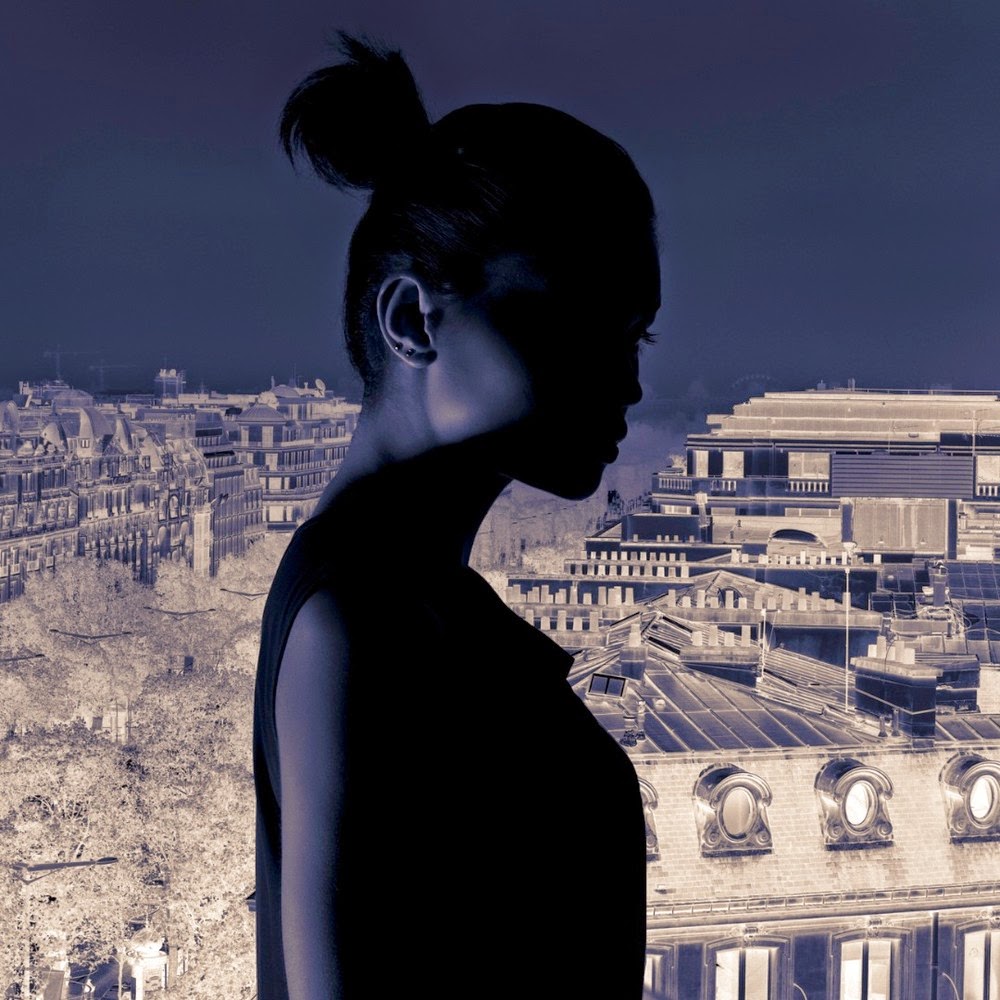
Djinane Alsuwayeh's (www.djinanealsuwayeh.com) body of work, 'Histories Urbaines' contains some powerful lighting techniques, capturing subjects from the side with minimal lighting, lighting only poart of their face. I plan to use split lighting in my film to show a split personality and demonstrate my understanding of how effective different lighting techniques can be.



Wednesday, 7 January 2015
Unit 11 film - Location scouting
For my unit 11 film based around Lacan's lack theory, I plan to shoot in London/Birmingham, a rural/semi-rural location and a photography studio.
London and/or Birmingham:

 As I am basing my films theme around loneliness and the lack of social interaction, I feel that London/Birmingham would be a prime location to shoot as they are both hectic cities full of energy and bustle. Yet both being major capital cities, they are still some of the loneliest places. When researching camera techniques I decided to use time-lapse to show a transition of time. I will set a camera up on a tripod and film a few minutes (3-4) of my main subject standing still in one spot facing towards the camera, I will then fasten the speed of the footage in post-production (Premiere Pro) to show how in a city multiple people pass by each other, paying minimal attention to the people surrounding them.
London and/or Birmingham:
Rural:
A rural/semi-rural location would fit in well with my film idea, opposing the busy bustle of a city. Straightforward shots of rural isolated locations on their own would work well, in addition to one single person in these shots. Due to the time of year (December/January and winter), the weather should hopefully look dramatic on vast expansive landscapes, which would add a sense of eeriness. I will plan to shoot on a day with dramatic weather e.g. heavy frost, to add that dramatic quality that I hope to attain, however I can not control this factor. I have not yet decided where to shoot precisely, but I will figure this out closer to the time of shooting, after more meticulous planning and location research.
Studio:
Shooting in a photography studio would allow me to control certain aspects such as lighting and background. Therefore I will be able to create whatever mood I feel necessary. Shooting against a plain black or white background would give a sense of loneliness, especially if the studio lighting is set-up correctly, setting a mood/tone. The photography studio at my college has professional lighting equipment which I can use. The mise-on-scene of my main subject would also need to be appropriate to fit in with the other factors, e.g. clothing. The split lighting technique would work effectively underneath studio lighting, to cast a dark shadow on one side of the face and show a split personality/lack of something.
Health and safety for all locations:
When shooting outdoors/on the road I will be considering health and safety. With regards to equipment and location, I will ensure that I/whoever I am with are away from any danger e.g. busy roads. I have filmed on location before and did not encounter any problems due to researching health and safety beforehand. I now feel confident in doing this again when filming on location.
I will also be aware of health and safety when shooting in the studio. When making my studio lighting techniques video in the photography studio, as a group we ensured that we knew all of the fire routes/exits, in the event we were required to use them. When setting up the studio lighting we made sure that the floors/plug sockets were all clear, and the lights were in the correct positioning before turning on, as we knew the lights would be too hot to touch/move once turned on. Once again, I will follow this plan to ensure the safety of myself and anybody else in the studio.
Monday, 15 December 2014
Unit 11 film - Types of shots to include
Here are a few planned shots and techniques that I plan to incorporate into my film:
- Timelapse - An effective shot, showing people moving rapidly around a still standing subject, giving a sense of time and loneliness.
- Studio shot - A subject standing against a plain black/white background, again, giving a sense of loneliness and isolation.
- Shallow depth of field - Separating the subject from their surrounding, being around people but not involved with them.
- Soft focus - Once again, separating the subject from their surrounding.
- Framing - Framing the subject, showing the importance of the subject in that location.
- Natural lighting - Giving a sense of realism and day-to-day life.
- Instrumental non-diegetic sound - Giving a sense of calm.
Here is a plan that I have created, featuring different shot types that I feel would work effectively in my film, based around Lacan's lack theory:

Friday, 12 December 2014
Camera techniques - Timelapse (un-finished)
I feel that this would be a brilliant technique to use in my film based around Lacan's lack theory, as I plan on conveying a theme of emptiness and isolation. I would use this technique effectively by using an actor standing in a busy location/crowd, with people carrying on in their day-to-day lives, and my actor standing still in the crowd. This would show a sense of loneliness effectively, especially at dusk, when the light has a transition of light to dark, showing an extended period of time. I plan to use this technique, in addition to other similar ones, showing a separation from society and human interaction, such as shallow depth of field and soft focus.
Experimentation:
Here I experimented with the technique myself. Placing my camera on a tripod and filming my subject in a busy location, standing still for approx 2 minutes, then speeding up the frame rate in post-production, via Premiere Pro. This is a test sample of the technique, to experiment whether it works effectively or not, so I can use it in my film footage.
...video will shortly follow!
Slavoj Žižek

Slavoj Žižek is a Slovenian Marxist philosopher and cultural critic, born March 21st 1949. His work and thought, aims to provoke and critique common views of the self and the world. The philosopher, for Žižek is more someone engaged in critique than someone who tries to answer questions by creating a theory. Žižek achieved international recognition as a social theorist after the 1989 publication of his first book, The Sublime Object of Ideology, which disputed a Marxist interoperation of ideology as a false consciousness and argued for ideology as an unconscious fantasy that structures reality. Žižek considers himself a political, radical and critic of neoliberalism. His political thought represents one of two paths of a progressive alternative. Either a return to the program of socialism, or the proposal of an alternative vision of social arrangements.
His unorthodox style, frequent newspaper op-eds, and popular academic books have gained Žižek a wide following and international influence. He has been labelled by some the Elvis of cultural theory. Foreign Policy listed him on its 2012 list of Top 100 Global Thinkers, naming him as a celebrity philosopher.
Ontology, ideology, and the real
In developing a thesis of ideology and its function, Žižek makes two intertwined arguments:
- He begins with a critique of Marx's concept of ideology in which people are beholden to false consciousness that prevents them from seeing how things really are. Žižek argues that peoples deepest motives are unconscious and that ideology functions as a justification for the existing social order. That is reality, constructed through ideology.
- However, the real is not equivalent to the reality experienced by subjects as a meaningfully ordered totality. For Žižek, the real name points within the ontological fabric, knitted by the hegemonic systems of representation and reproduction. Which nevertheless resists full inscription into its terms, and that may as such attempt to generate sites of active political resistance.
Žižek gives primacy to the creative subject who can manipulate discourse even while he or she is shaped by it. This is illustrated by the proposition that although biological psychology might one day be able to completely model a persons brain, there will still be something left over that can not be explained. Žižek suggests that consciousness is opaque. He says that one can not ever know if an apparently conscious being is truly conscious or a mime, and furthermore, that this confusion is fundamental to consciousness itself.
The Pervert's Guide to Cinema (2009)
Slavoj Žižek guides viewers through some of the greatest movies ever made, discussing the hidden language in film and revealing what movies can show people about themselves. Here he delves into the work of David Lynch, prompting revaluation of opinions about Alfred Hitchcock films.
The Pervert's Guide to Cinema (2009)
Slavoj Žižek guides viewers through some of the greatest movies ever made, discussing the hidden language in film and revealing what movies can show people about themselves. Here he delves into the work of David Lynch, prompting revaluation of opinions about Alfred Hitchcock films.
- In Possessed (1947), the train acts as order. She views the 'magic of the screen', almost as she is in a cinema. Class, race and social construction of the world is portrayed.
- The Matrix (1999), the blue pill and red pill is not a choice between illusion and reality.
- The Birds (1963), is a psychological story surrounded by females. Why do the birds attack? A foreign dimension intrudes, that literally tears apart reality.
- Psycho (1960), explored Freud's theory, of the id, ego and superego. The id is the basement, the ego is the ground floor dealing with reality and normality, and the superego is the attic with the mother being the dominant voice.
Friday, 5 December 2014
Camera techniques - Soft focus

This clever technique goes back to the early days of photography and video. Giving a nice soft focus around the edges of the frame. Another way of doing this technique is by using a cheap UV filter, and carefully smearing vaseline on that, so not to damage the camera lens. Other substances would work effectively, however vaseline is the most common used, as it is known to be effective and is a cheap alternative, giving a dream-like effect. Commonly used in old films and portrait photography to soften the image slightly. An alternative to vaseline is using an old pantyhose, filtering it across the lens for a soft focus of the entire lens, rather than just around the edges.

Subscribe to:
Posts (Atom)